

HOLY SH*T PARK

In 1967, upcoming mushroom magnate Cameron Ostrom bought a small farm just past the edge of town on the corner of Steilacoom and Marvin. At the time, the only thing out there besides the farm was the dump. As the Olympia metropolitan area spread north, Mushroom Corner was no longer out in the boonies. The area became inundated with box stores, schools, offices, and houses.
Ostrom’s was also growing. It had matured into the largest commercial mushroom plant in Washington (and Oregon). At the peak of their Lacey era, Ostrom’s employed over 300 people and produced around forty thousand pounds of mushrooms daily. But how do you grow mushrooms on this scale? What agricultural magic — or industrial madness — is required?
The process is simple. You just need chicken manure. Biblical quantities of chicken manure.
Then it gets worse. They do something with it that’s gross. You might want to stop reading. It’s awful.
After blending it into a stool-smoothie, they pour the runny gut sludge into a heated concrete swimming pool. The pool works like an enormous crock-pot. The foul frappé simmers for a week. There were a couple dozen pools. A fresh crock is started several times a day. No breaks. As one hot plume of stink wanes, another takes its place.
The rolling amplification of avian stench bypassed disgust and entered the realm of awe.
As I made my way through the factory tour, I found myself whimpering the S-word. The place was utterly shocking, a nuclear war on my sinuses. The tour was like the strangest nightmare. After it ended, when I got home, I left my clothes in the backyard, took multiple showers, and used most of a bottle of shampoo. I realized my clothes were a lost cause, moved them from the lawn to the garbage can, and I had my neighbor smell me. I really couldn’t tell that the smell was gone. I’m still not sure.
This story is weird enough for it to end here, but it gets weirder. A lot weirder.
THE RAC
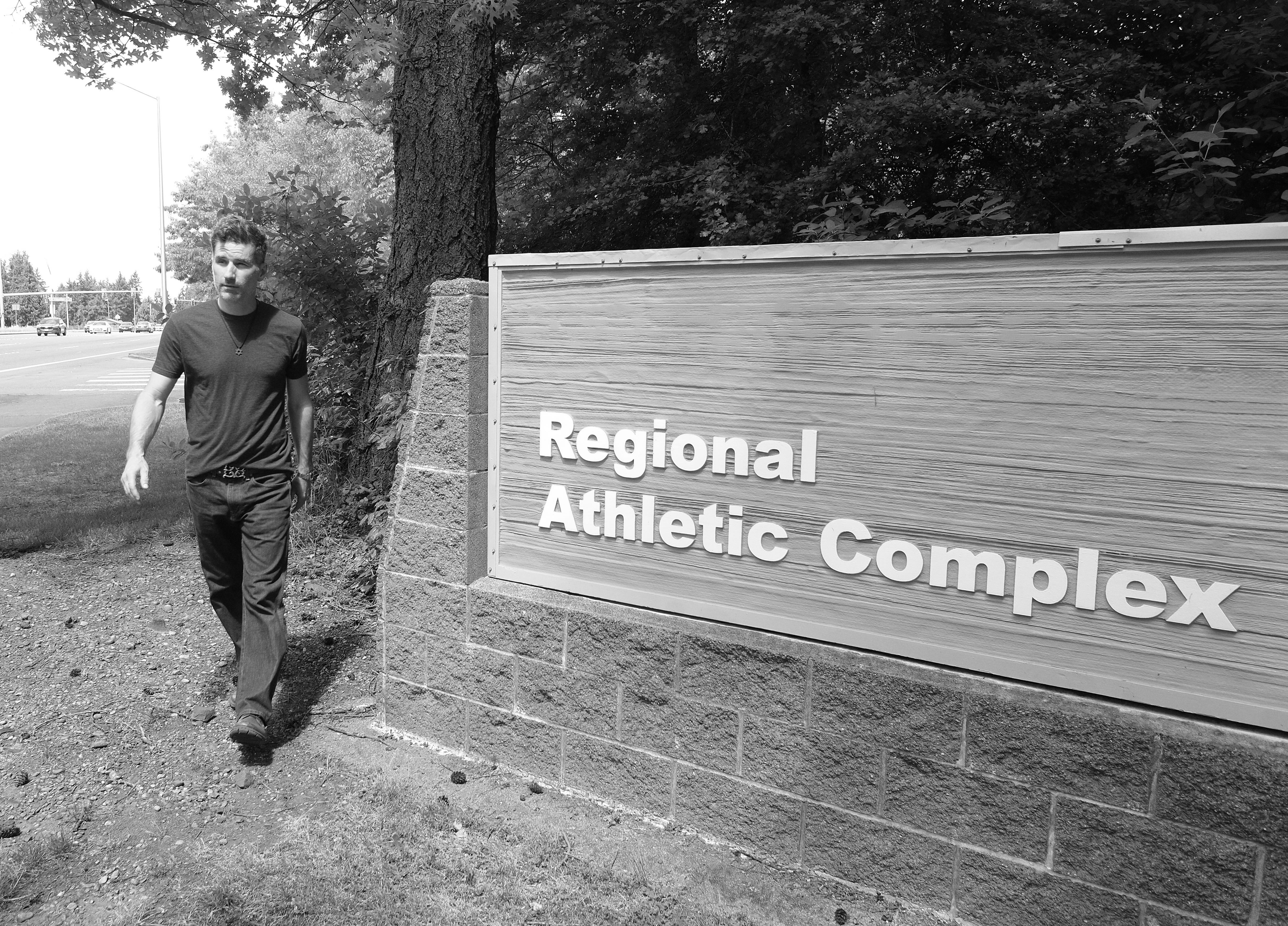
The real mystery wasn’t the science of the slurry; it was the collective psychosis of the neighbors. All those years, as Ostrom’s was weaponizing the sky with fecal fog, just across the street, there was a place called The Regional Athletic Complex (RAC). It’s actually still there. Only now there isn’t a total shit show next to it.
Developed in 2009, the RAC is a campus of baseball diamonds and soccer fields. I made multiple visits. On typical summer evenings, I observed the choreography of back-to-back games and hundreds of families moving through the complex. Some sat in bleachers; some sat on blankets or camp chairs. Some enjoyed snacks. It wasn’t uncommon to see full-blown picnics, whole dinners. Totally normal stuff. Potato salad and PBJs.
Players would jog off the fields, lungs burning, gasping for deep, restorative gulps of… what, exactly?
Three hundred yards away, an olfactory factory was broadcasting a cooked waste front that rolled across the road and settled over the bleachers. It was a civic exercise in mass gaslighting. To play at the RAC was to pretend that the air wasn’t thick with the gastric ghosts of a billion chickens.
It was surreal. A theater of the absurd where the sky was held captive in a permanent thermal inversion of airborne effluence. And nobody said anything about it — so many of them enjoying paper plates loaded with delicious American fare.
I approached people and delicately asked the obvious. I spoke with dozens who lived in the sprawling neighborhoods around the RAC. I asked if they knew about the smell when they bought their house.
“Oh, that? We barely notice it anymore.”
“When we first moved here, it seemed so much worse.”
“You kind of get used to it.”
I thought, how is this even possible? This is not standard caliber farm odor. This is the off-gas of way too many industrial doo-doo cookers.
Denial was the rule that ran here for a decade. There was an unspoken agreement to not mention it. I did.
“No, really, I don’t notice it.”
“Well, it’s all relative. It’s so much better now.”
“They have these new technologies at the plant…”
“It really does seem to be getting better…”
But none of that was true. In the five years before relocation, Ostrom’s production didn’t just increase. Their production climbed year after year, eventually doubling. Their hot slop process allowed for massive manure-based mushroom manufacturing. It’s doubtful that feces has ever been slow-cooked in these quantities. And never before has this process operated on this scale next to subdivisions, strip malls, and youth soccer fields.
POULTRY MOVEMENT
The residents — and regulators — largely treated the air as a nuisance rather than a hazard. Legally, the stench was classified as harmless; it didn't meet the high bar of a 'public health threat' required for the state to shut them down. Ostrom’s maintained their permits, operating within a gray area where a smell can be foul enough to ruin my appetite, yet 'safe' enough to be legal.
Ethically, socially, and even environmentally, recycling animal waste for mushrooms makes perfect sense.
And Ostrom’s was there first, before the houses, before the stores, before the RAC.
Today, Ostrom’s is located next to the nuclear waste disposal center at Hanford. A fitting transition — finally, the smell has met its match.
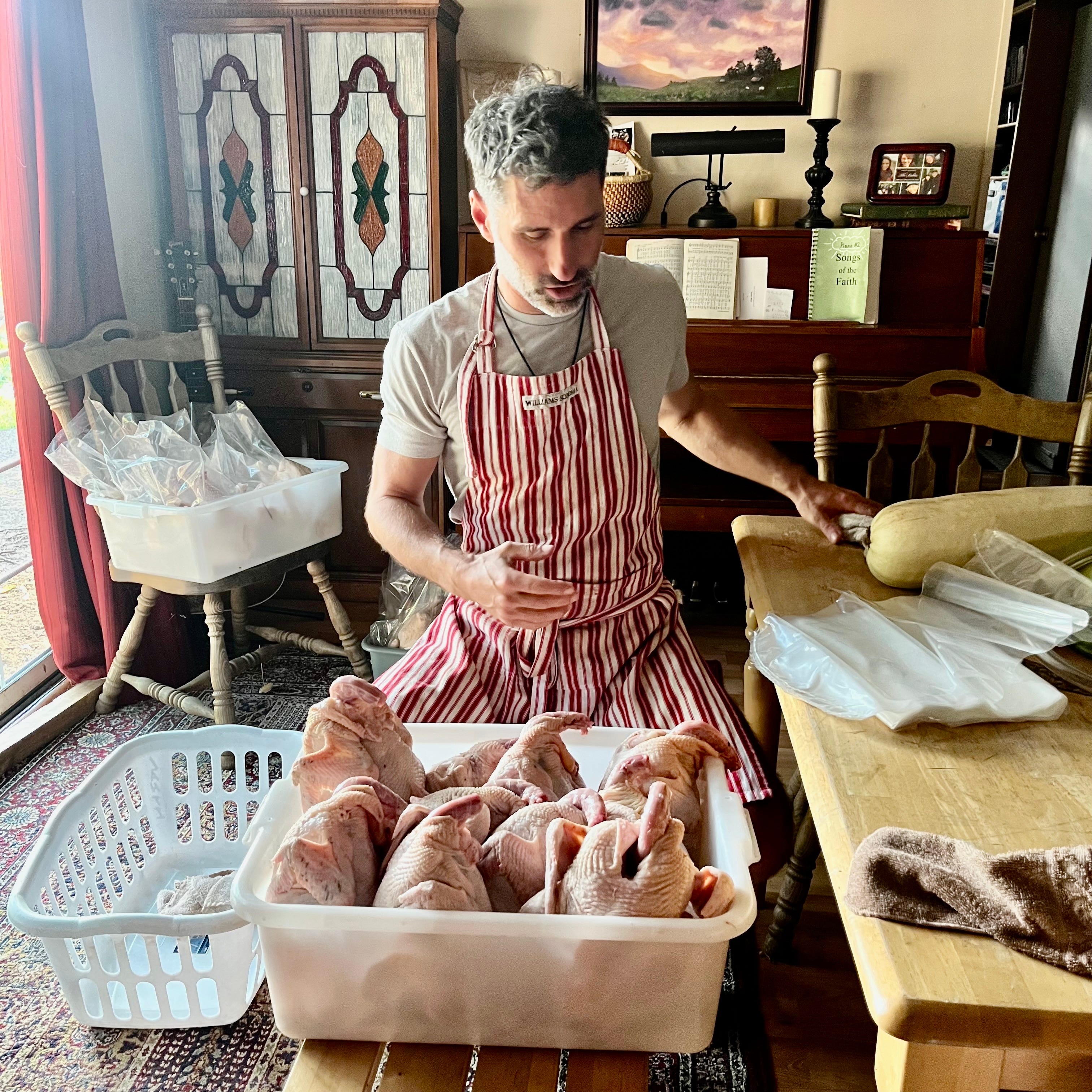
David Scherer Water recently did a work trade at a Thurston County poultry farm that used to supply Ostrom’s with manure.
Migration of the feces
Bought your book a while ago, and recommend it to everyone who's not from Olympia!